
Lego SMART Play™ Platform: Building Network Effects, Brick by Digital Brick

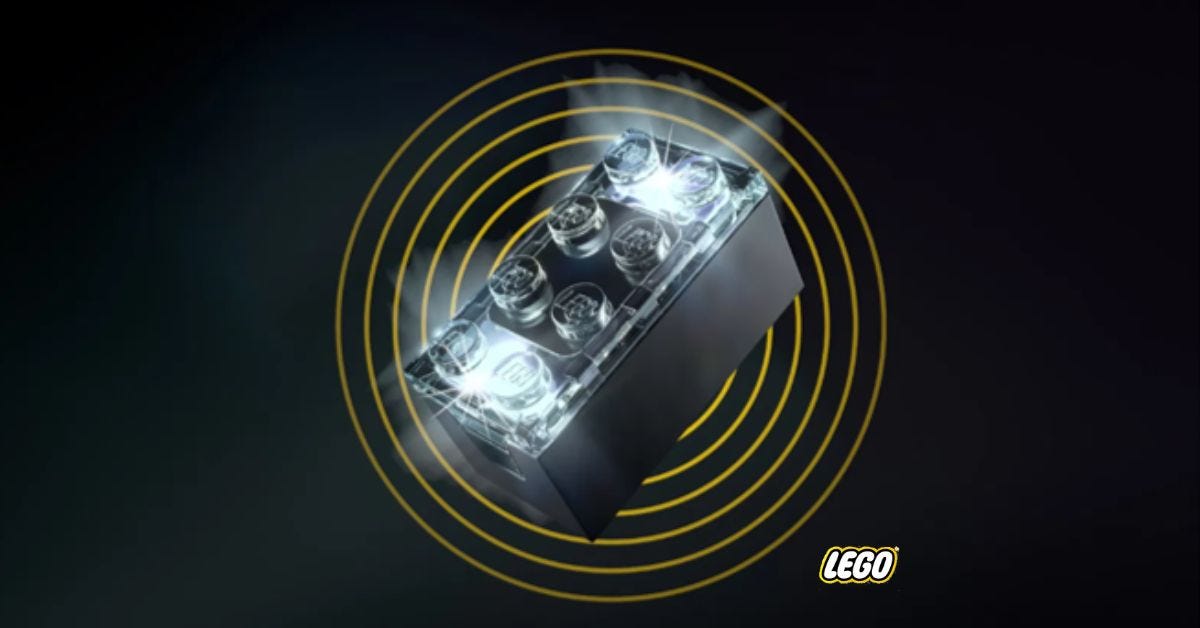
Lego impressed the crowds at CES in Las Vegas this week with the rollout of its new LEGO SMART Play™.1 The announcement represents the next evolution of Lego’s platform strategy. It builds on the LEGO System in Play, which was originally a physical system of modular bricks, studs, and minifigures, by adding a physical-digital layer. This new digital layer includes embedded sensors, chips, bluetooth networking, and near-field magnetic positioning, allowing for screen-free creative play.
This new product line is fully compatible with existing bricks, turning the billions of bricks that have been sold worldwide into a foundation for smart interaction. This is made possible by the introduction of three new components: SMART Brick, Tags, and Minifigures.
In the past, Lego relied on physical compatibility and partnerships with other companies, such as Star Wars licensing and LEGO Ideas, to encourage creativity and endless combinations.2 The SMART Play system boosts the level of connectivity that creates new network effects. As more elements are added, play becomes more engaging, with lights and sounds that animate duels, races and other interactions. The system is also updatable, allowing for future theme expansions beyond the initial Star Wars sets launching in March 2026.
Lego’s Platform Roots
This innovation is built on decades of strategic changes that focus on user-driven, modular systems. The new combination of physical and digital elements further positions Lego as a leader in scalable platforms, allowing for endless expansions through future updates and sets.
Lego started modular platforms with the 1949 interlocking brick.3 The early interlocking brick was a modest success but not yet a global phenomenon, partly because the clutch power and versatility were limited. The real surge in worldwide popularity came after LEGO perfected the modern stud‑and‑tube brick in 1958 and launched the “system of play” (e.g., Town Plan) in the 1950s–60s, which turned the modular platform into an internationally scalable system sold across Europe and, later, worldwide.4 When the company faced near-bankruptcy in 2003-2004, it refocused on core bricks, simplified operations, and sold off non-core businesses like theme parks. This change led to revenues quadrupling by emphasizing standardized, adaptable parts and licensing partnerships.
Key Innovation Milestones
Introduced the Minifigure in 1978, a key “platform element” that allowed for themed storytelling and compatibility across sets.
Launched LEGO Ideas (which evolved from CUUSOO in 2008) as a crowdsourcing platform, turning fan designs into commercial sets after 10,000 votes, and fostering co-creation and loyalty.
Entered the digital-physical hybrid market with Mindstorms (1998, smart bricks for robots) and video games, adapting to tech-savvy users without giving up hands-on play.
Expanded through partnerships (like Star Wars and Marvel) and adult lines like Creator Expert, segmenting the platform for different users.
Platform Expansion
Smart Play takes Lego’s strategy further by adding intelligence in a way that is not visible, prioritizing open-ended creativity over relying on apps, much like Lego Ideas made design more accessible.5
The initial are the starting point for adoption, with Lego planning new updates, launches, and technology to grow the ecosystem. This helps the company keep growing amid digital changes, using the benefits of 90+ years of interoperability.
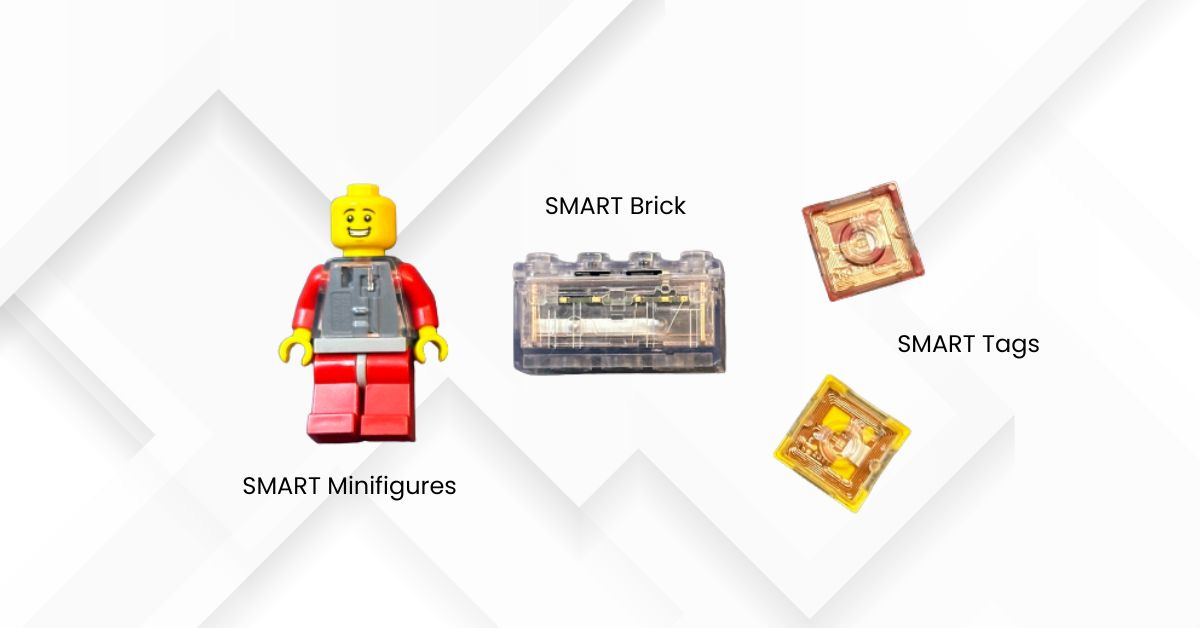
The LEGO SMART Play platform has three main parts that work together: the SMART Brick (the “play engine”), SMART Tags (which provide context), and SMART Minifigures (which trigger characters), all of which are fully compatible with the existing LEGO System-in-Play.
These parts use patented technology like ASIC chips, BrickNet, a bluetooth-based networking capability, and magnetic positioning to allow for interactions that are responsive and do not require a screen, using sounds, lights, and motion detection. A wireless charging pad can power multiple units, and there is an optional LEGO SMART Assist app for diagnostics and updates.
SMART Brick
This 2x4 brick contains a custom ASIC chip, sensors for acceleration, light, and sound, an LED array, a miniature speaker with a synthesizer, and copper coils for near-field magnetic positioning. It can detect nearby elements and interpret play actions, such as tilting or swinging, and then generate responses like propeller sounds or lights. The BrickNet feature allows for mesh networking between multiple bricks, with encryption that focuses on privacy.
SMART Tags
These 2x2 studless tiles have unique digital IDs that can be read using NFC or magnetic coils. Each tag determines specific behaviors, like a helicopter tag that triggers rotor sounds. When placed in builds, they provide contextual cues without changing the way things look, allowing for a lot of customization across different themes. Each set includes 3-5 tags, such as a throne or lightsaber duel variant in Star Wars kits.
SMART Minifigures
These minifigures look standard but have embedded digital IDs that give them personalities and actions, like a grumpy Vader or a heroic Luke. This triggers responses from the bricks, such as voice lines or duels. They interact through positioning awareness, which enhances storytelling in real-time. The initial sets come with 2-3 minifigures per kit and are fully compatible with older sets.
Supporting Accessories and Network Effects
Wireless charging pads allow for one-to-many recharging, making batteries last for years even when not in use. The LEGO SMART Assist app is used for firmware updates, diagnostics, and programming tags, but playing with the toys does not require the app. The technology is covered by over 20 patents and is both miniaturized and resilient.
The LEGO SMART Play platform has a modular core, works seamlessly with other parts, and can connect to a network on its own. It is also designed to be expanded, scaling with the user’s creativity and future updates. This allows for network effects, where adding more parts creates richer interactions without needing a central control or screens.
All existing LEGO bricks are compatible with the SMART elements, allowing users to combine them in countless ways. The platform uses near-field magnetic positioning and NFC to detect Tags and Minifigures without needing cameras, keeping the classic look and feel.
The BrickNet protocol allows SMART Bricks to form their own networks, sharing data on position, orientation, and distance in 3D space without needing a hub, app, or setup. The data is encrypted for privacy, and the platform can create real-time sound effects that respond to play.
Firmware updates can be done through the SMART Assist app, adding new behaviors to the toys. LEGO plans to release more themes beyond the initial Star Wars launch in March 2026. As more elements are added, they create more interactions, such as battles between multiple Bricks that are aware of their surroundings, increasing the value of play and encouraging users to buy more. Over 20 patents protect the “invisible tech” to ensure it can be expanded upon in the long term.
BrickLink
Another part of the Lego ecosystem is BrickLink. It’s the world’s largest online marketplace where you can buy and sell new and used LEGO parts, sets, and minifigures. BrickLink helps connect Lego fans with developers by letting them find parts, design digitally, and build physical models using its marketplace, Stud.io software, and Designer Program. With millions of parts from over 10,000 sellers, it gives adult fans of Lego (AFOLs) the exact pieces they need for custom models, and Stud.io lets them create precise prototypes, parts lists, and instructions.
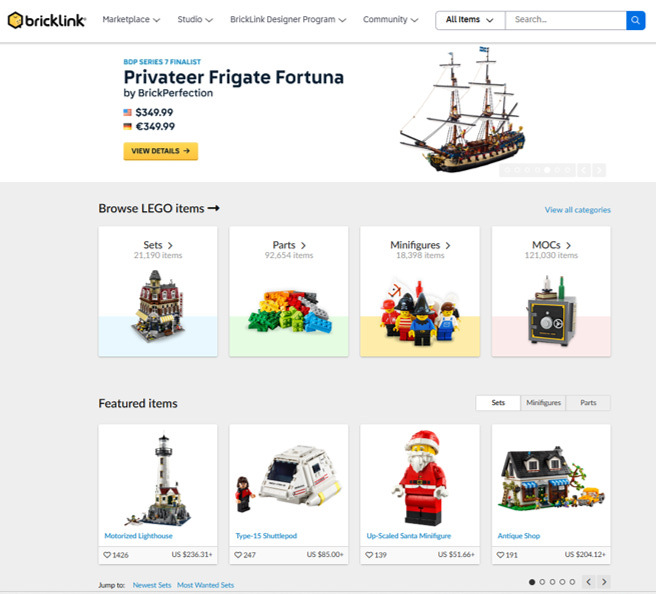
This creates a strong design process where developers work in Stud.io, check what parts are available on BrickLink, and share their work on platforms like Rebrickable or at events like BrickCon. The Designer Program, started in 2020, lets Stud.io users submit their designs for community crowdfunding, and if a design gets 3,000 or more orders, it can become an official set.6 So far, over 58 designs have been made into official sets, including Series 9, which is coming out in 2026.
BrickLink’s marketplace analytics give Lego real-time information about what’s in demand, which helps them innovate. The success of the Designer Program also shows that concepts shared on forums and Reddit are valid. After Lego acquired BrickLink in 2019 and integrated accounts in 2025, these processes have become more streamlined, making it easier for fans and Lego to work together.
BrickLink was started in 2000 by a Lego fan who wanted to connect with other adult fans worldwide. In 2013, Jung-Ju “Jay” Kim, the founder of Nexon, bought BrickLink and added features like Stud.io design software and the Designer Program. In 2019, The LEGO Group bought BrickLink to work more closely with its adult fans, and it has kept running independently while integrating tools like crowd-sourced designs.7
Since Lego bought BrickLink, it has become more integrated, but it still lets fans buy and sell directly with each other. In September 2025, BrickLink started requiring users to merge their accounts with their LEGO.com profiles, using a single sign-on system with LEGO usernames and avatars. This change got rid of custom pictures and inactive accounts, but some fans were frustrated by the stricter policies.
The BrickLink Designer Program has grown, with tools like Stud.io letting fans submit designs that can become official sets if they get enough votes or orders. In January 2026, the finalists for Series 7 were announced, and pre-orders started on February 16 for limited runs of up to 30,000 units. BrickLink has also tightened its content policies to match Lego’s, including removing military or religious custom models in 2024, and suspending service in 35 countries in late 2025 due to compliance issues, which caused backlash and rumors of a shutdown.
A recent notable development is Lego’s decision to stop BrickLink’s marketplace operations in 35 countries as of January 31, 2026.8 BrickLink will still allow buying and selling in other countries, including major markets like the United States, Canada, the United Kingdom, Germany, France, Italy, Spain, the Netherlands, Australia, New Zealand, Japan, Denmark, Mexico, Poland, Sweden, Norway, Finland, and most of Western Europe, North America, Japan, and South Korea.
The 35 countries affected by this decision are Indonesia, Turkey, South Africa, Taiwan, Ukraine, Brazil, Serbia, the United Arab Emirates, Kazakhstan, Peru, Israel, India, Morocco, Chile, Vietnam, Georgia, Lebanon, Saudi Arabia, Qatar, Oman, El Salvador, Bahrain, Azerbaijan, Armenia, Pakistan, Egypt, Moldova, Ecuador, Argentina, Costa Rica, Colombia, Bosnia and Herzegovina, Turkmenistan, Greenland, and San Marino. According to Lego these countries were chosen due to operational challenges. Users in supported countries can still buy and sell worldwide, while those in the affected regions can browse, use the Designer Program, and access services like catalogs, but they will not be able to make marketplace transactions after the deadline. BrickLink plans to review this decision periodically to see if it can be reversed.
Many users were angry, disappointed, and sad about Lego’s decision to scale back BrickLink’s marketplace operations. Fans criticized the short notice, which was initially just two weeks before the December 12, 2025 cutoff, and questioned the reasons given, such as the lack of resources, considering Lego’s substantial profits.9 Sellers in affected regions like Brazil, India, and South Africa were upset about losing their livelihoods and access to affordable parts, given the high retail prices and import barriers. There was a lot of outrage on Reddit, YouTube, forums, and social media, with people using terms like “devastating,” “heartbreaking,” and “abandonment,” and accusing Lego of prioritizing profits over its global fanbase. Some videos were titled “LEGO NUKES Their Fanbase” and “Ruining BrickLink.” BrickLink’s Head, Steven Lee, apologized and extended the deadline to January 31, 2026, waived seller fees through January, and promised periodic reviews, but many users did not think this was enough.10
Future of SMART Play™ and BrickLink
The premium pricing of Smart Play sets starting at $70, will create lucrative resale opportunities, especially for used or limited-edition variants. The first sets will be Star Wars themed. They will be available for purchase starting March 1, 2026, in select markets, and available for pre-order on January 9, 2026.
Darth Vader’s TIE Fighter (75421): €69.99 / $69.99.
Luke’s Red Five X-Wing (75423): €89.99 / $99.99.
Throne Room Duel & A-Wing (75427): €159.99 / $159.99.
BrickLink’s Stud.io software will become the essential digital workbench for designing SMART integrations, creating precise parts lists and instructions that can be used directly in the Designer Program. Community-voted sets that include SMART elements, like multi-Brick fleets with emergent behaviors, could lead to faster resales of prototypes, as early adopters sell tested designs, creating a cycle of innovation and liquidity.
There will likely be many listings for “SMART-compatible” kits and bundles on BrickLink, catering to adult Lego fans worldwide who want to expand their spatial play. Each traded element adds value to the ecosystem: a single brick provides basic reactivity, but traded collections enable complex, position-aware games, which reinforces BrickLink’s role in connecting creators. Even with a scaled-back BrickLink marketplace, a growing market for secondhand inventory will emerge in the large markets that continue to be served. Potential official storefront integrations could also make BrickLink the key resale channel for SMART expansions.
Conclusion
LEGO SMART Play™ represents another step forward in Lego’s platform strategy, combining digital connectivity with its classic System-in-Play while remaining fully compatible with billions of existing bricks. The modularity of SMART Play, powered by SMART Bricks, Tags, and Minifigures with BrickNet mesh networking, enables new interactions and set creations. Lego’s marketplace, BrickLink, is likely to enhance these capabilities by allowing the resale of premium SMART components, and Stud.io prototyping will fuel the Designer Program for fan-created sets that may include SMART elements.
Starting March 1, 2026, with Star Wars sets available for pre-order from January 9, SMART Play™ will offer firmware updates and expanded themes, fostering loyalty through co-creation on LEGO Ideas and the Designer Program. By blending its physical heritage with digital extensibility, Lego is likely to strengthen its position as a leader in circular, user-generated play ecosystems.
Sources
Thank you for this excellent analysis, Peter. Here is a complementary piece that discusses how LEGO’s two‑pronged IP strategy shapes network effects, long‑run profitability, and the public’s interest. https://paulbelleflamme.substack.com/p/smart-play-smart-strategy-lego-openness?r=cyw0z
Paul Belleflamme has pointed out that there is an important IP angle associated with Lego’s platform strategy. SMART Play and SMART Bricks gives Lego an entirely new technical layer to patent, shifting its IP moat from the basic plastic geometry to the invisible electronics, sensing, and networking that make those bricks “smart.” Lego has lost its patent protections around the classic stud-and-tube bricks. Competitors can legally copy the geometry. SMART Play reintroduces protectable functionality by embedding a custom ASIC, sensor suite, coils, and a proprietary positioning and networking stack inside a standard-footprint 2×4 brick. Lego states that SMART Play/SMART Brick technology is covered by “no fewer than 25” patents or “more than 20 patented world-firsts,” spanning the ASIC architecture, magnetic positioning, BrickNet wireless protocol, charging, and sensing methods.